

When it comes to roofing, asphalt shingles remain a popular choice for homeowners due…
LP SmartSide vs James Hardie: Choose the Best Siding
Your home represents perhaps your most significant financial asset, and the siding you choose acts as its primary shield against the elements. However, when you are standing in the aisle staring at two samples that look nearly identical— LP SmartSide and James Hardie—it is difficult to determine which one will actually protect that investment for the next thirty years. While curb appeal matters, the real decision lies in how these materials behave once the installation crew leaves and the first storm rolls in.
Most homeowners eventually narrow their search to these two industry titans, yet the confusion is understandable because they often simulate the same wood-grain aesthetic. Despite sharing a look, their internal composition is as different as a ceramic plate and a heavy-duty cutting board. James Hardie utilizes fiber cement technology to create a masonry-like product, whereas LP SmartSide relies on engineered wood strands treated with zinc borate for resilience.
💡What’s Under the Paint? The “Liquid Stone” vs. “High-Tech Wood” Recipe
When you look at your house from the curb, both siding options mimic the texture of traditional cedar so well that it is often impossible to tell them apart without touching them. However, peel back that factory finish, and you find two completely different “recipes” that dictate how your home handles the elements. Recognizing these ingredients explains why a ceramic plate shatters while a heavy-duty cutting board only dents.
James Hardie is essentially a masonry product, often described as “liquid stone” during the manufacturing process. It relies on a heavy mixture of Portland cement, sand, and cellulose fibers—microscopic plant-based threads that act like rebar to bind the cement together. Because the substrate contains no actual lumber (other than those tiny structural fibers), the board is naturally unappealing to pests and stands up to fire much like the concrete in your driveway.
On the other side of the aisle, LP SmartSide takes a biological material and chemically upgrades it for survival. It starts with wood strands but treats them with a crucial compound called zinc borate, a safe preservative that makes the wood unrecognizable as food to termites and stops fungal decay in its tracks. These strands are coated in water-resistant waxes and high-strength resins, compressing them into a dense block that retains the natural flexibility of wood without its usual weakness to moisture.
This fundamental difference in chemistry sets the stage for how each board reacts when life happens. While the cement-based Hardie board offers rigid, heavy-duty protection against heat, the engineered wood structure of LP creates a lighter, more shock-absorbent shield. That flexibility becomes the deciding factor when we move from chemistry to physical trauma, specifically seeing what happens when a stray rock meets your exterior wall.
❓The “Lawnmower Rock” Test: Which Siding Actually Survives a Neighborhood Mishap?
Structural rigidity, while excellent for holding a shape, creates a hidden vulnerability when facing blunt force. Because fiber cement is essentially a masonry product, it has very little “give.” When a fast-moving object strikes the surface, that energy has nowhere to go, often causing the board to crack or shatter much like a dropped dinner plate. In contrast, the resin-bonded strands in engineered wood retain enough elasticity to absorb the shock, acting more like a dense rubber mat that rebounds with nothing more than a cosmetic dent.
This difference in durability changes the maintenance equation for homeowners in active neighborhoods or storm-prone regions. You might initially investigate engineered wood for the termite resistance of LP SmartSide siding, but its ability to handle physical trauma is equally distinct when compared to the impact resistance of James Hardie siding. Consider how they handle common backyard threats:
- Hail Storms: Fiber cement may fracture or crack upon impact; engineered wood typically resists breaking and may only suffer minor dents.
- Stray Baseballs: A direct hit can shatter a section of cement board; the wood composite tends to bounce the ball back with structural integrity intact.
- Lawnmower Debris: Thrown rocks often chip or puncture rigid cement; the dense wood strands usually absorb the blow without penetrating the substrate.
Dealing with the aftermath of these impacts highlights a final practical distinction. If a Hardie plank cracks, the repair usually involves cutting out and replacing the entire board—a labor-intensive task requiring specialized tools. A dented LP board, however, can often be fixed with a simple wood putty patch and a touch of paint. While engineered wood clearly takes the trophy for surviving hard knocks, the conversation shifts entirely when we introduce elements that wood naturally fears: extreme heat and constant moisture.
🌧️Why James Hardie Wins the Fire and Water Battle in Humid Climates
While physical impact is a concern for some, the fire resistance rating of fiber cement siding offers a level of protection that no wood-based product can match. James Hardie is composed principally of sand and cement, granting it a non-combustible classification that refuses to ignite even when exposed to direct flame. This characteristic is critical for homes in wildfire-prone zones and can often lead to lower premiums on your homeowner’s insurance policy, as insurers recognize the reduced risk compared to combustible wood composites.
Water presents a more insidious threat than fire, specifically for homes located in coastal regions or areas with heavy rainfall. When evaluating which siding is better for humid climates, fiber cement stands out because it acts more like a masonry wall than a sponge. It is largely impervious to the humidity-driven expansion and contraction cycles that plague organic materials, meaning it won’t rot or warp simply because the air is heavy with moisture.
Even the most advanced engineered wood products face a specific vulnerability known as “edge swell.” Crucially, if the protective paint coating on engineered wood is compromised, the exposed wood strands can drink up water and permanently expand, causing unsightly bulging at the seams. Fiber cement maintains its dimensional stability regardless of seal integrity, ensuring that a skipped caulking joint doesn’t turn into a swollen structural failure.
Opting for this level of elemental defense does come with a trade-off in weight and handleability. The very density that makes fiber cement fireproof and rot-resistant also makes it heavy and difficult to maneuver, a factor that significantly changes the math when your contractor draws up the installation quote.
🔨The Hidden Labor Costs: Why Installing Hardie Plank Can Cost 20-30% More
While the material price tags for these two brands often sit close to one another on the shelf, the final quote from your contractor frequently tells a different story. The installation process for fiber cement is significantly more demanding than for engineered wood, typically driving the cost to install LP SmartSide vs Hardie Plank apart by 20% to 30%. This price gap exists because contractors aren’t just charging for time; they are charging for the physical difficulty and specialized safety measures required to get the job done right.
Cutting into James Hardie boards releases silica dust, a fine mineral powder that poses serious health risks if inhaled. To manage this safely, crews must use specialized circular saws with vacuum attachments or mechanical shears, and they must wear respirators to protect their lungs. In contrast, comparing installing fiber cement siding vs wood composite reveals a stark difference in site efficiency; LP SmartSide cuts just like traditional lumber, allowing carpenters to use standard woodworking tools without the need for complex dust mitigation strategies.
The physical burden of the material further dictates how fast the crew can move and how many hands are needed on deck:
- Weight Load: Hardie Plank weighs roughly 2.3 lbs/sq. ft., making it heavy and brittle, whereas LP SmartSide is lighter and stronger at ~1.5 lbs/sq. ft.
- Crew Requirements: Fiber cement usually requires two people to carry a long plank to prevent it from snapping under its own weight; a single installer easily manages engineered wood.
- Coverage Speed: LP boards are available in 16-foot lengths, compared with Hardie’s 12-foot standard, resulting in fewer seams to caulk and faster wall coverage.
Because of these complexities, it is crucial to hire a certified LP Smartside contractor like ONE NATION EXTERIORS or a specialized James Hardie installer who understands the specific handling requirements of your chosen material. A crew inexperienced with fiber cement might crack boards or install them incorrectly, potentially voiding that expensive warranty. Once the siding is securely on the wall, however, your focus shifts from the installation bill to the long-term visual payoff.
🏠Curb Appeal and Color Longevity: Will Your House Still Look New in 10 Years?
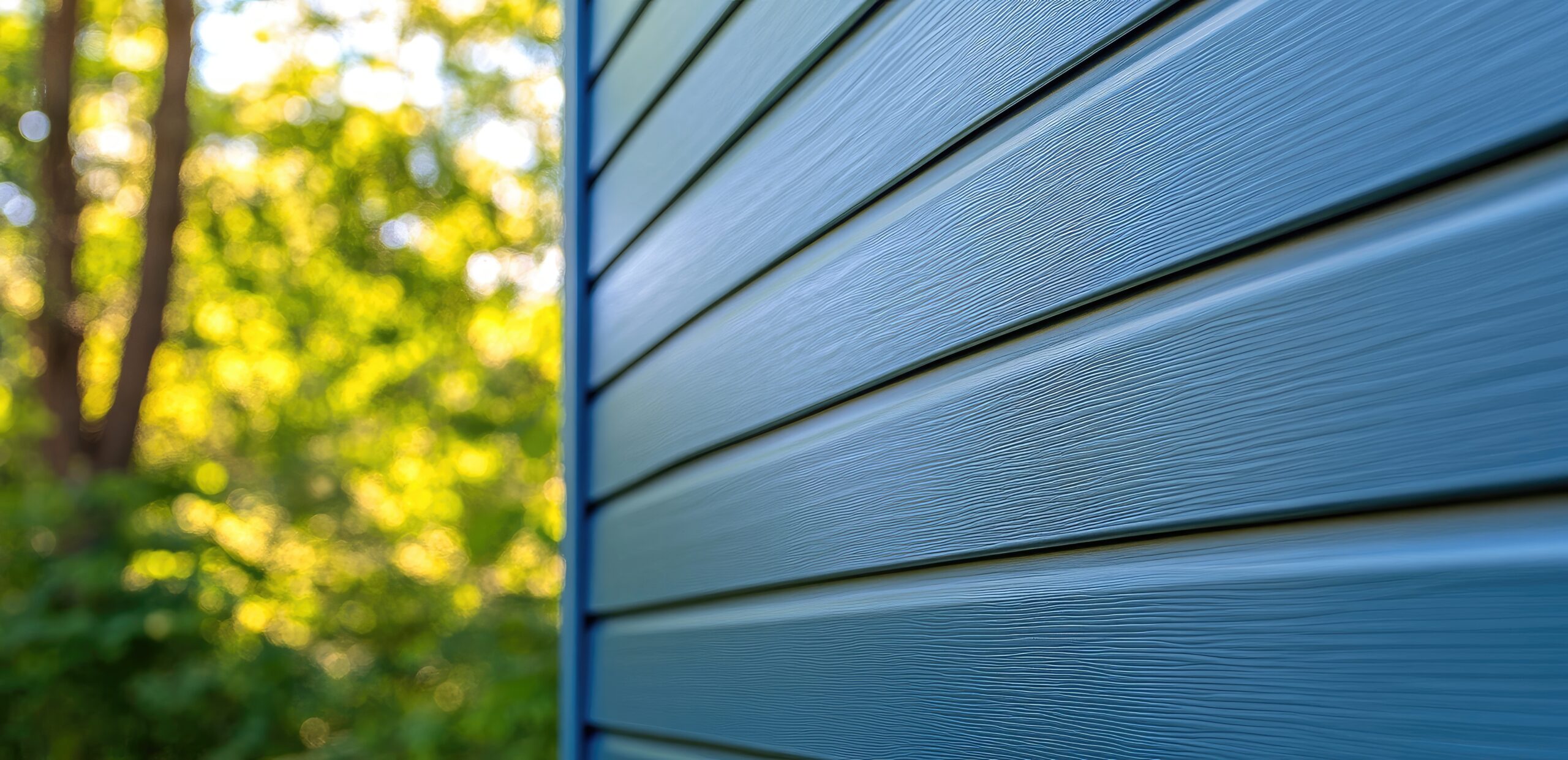
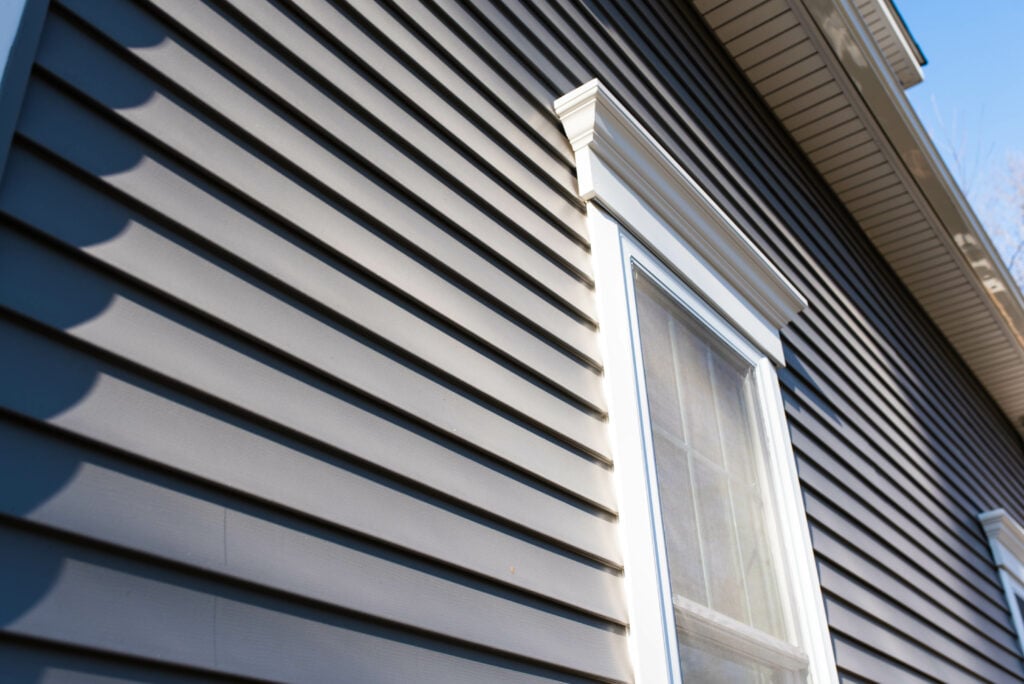
Distinguishing between these two materials from the curb is difficult, but getting up close reveals distinct character differences. James Hardie relies on an embossed texture to mimic cedar, creating a consistent appearance that homeowners appreciate for its clean, historic look. In contrast, LP SmartSide utilizes its actual wood strand composition to create a deeply embossed, realistic grain with significant visual depth. Weighing these aesthetic pros and cons of lap siding materials is subjective, but generally, LP feels more like traditional timber to the touch, while Hardie offers the solid, uniform matte finish of masonry.
Factory-applied color technology has revolutionized maintenance timelines, moving past the days of repainting every few summers. James Hardie’s ColorPlus® Technology involves baking multiple coats of paint onto the board under high heat, creating a “baked-on finish” that resists chipping far better than field-applied paint. Similarly, LP’s ExpertFinish® uses high-grade acrylics designed for extreme UV resistance to prevent fading in the sun. Choosing these pre-finished options drastically reduces the immediate painting requirements for pre-finished siding, allowing your home to retain its vibrant look for over a decade before you need to pick up a brush.
A home that maintains its exterior finish against the elements inevitably commands a higher market price. Because fiber cement is recognized as a premium, fire-resistant masonry product, the resale value of James Hardie boards remains consistently high, offering a strong return on investment. However, even the most durable finish is only as good as the guarantee backing it up. Understanding how these companies support their products when things go wrong requires a careful look at the fine print to spot potential holes in your safety net.
❄️Making the Call: A 3-Step Plan to Choose Your Home’s Next Skin
You no longer just see two brands of siding; you see two distinct defense systems for your home. Understanding the structural differences between fiber cement and engineered wood empowers you to choose based on protection rather than just curb appeal.
For the “Budget-Conscious Hail-Belt” homeowner, LP SmartSide often wins as the best siding for cold weather climates due to its impact resistance and ease of handling. Conversely, for the “Coastal/Fire-Prone” homeowner, James Hardie’s non-combustible nature offers superior safety. While both companies are improving the environmental impact of siding manufacturing, your final choice should align with the specific threats—rot, fire, or flying debris—most common in your area.
To ensure this comparison translates into success on your walls, ask your potential installer these three critical questions:
- Installation Integrity: “Do you seal every cut edge (for LP) or use dust-reducing cutting tools (for Hardie) to ensure warranty compliance?”
- Local Performance: “In our specific zip code, which material do you see suffering more from local moisture or impact damage?”
- Cost Realism: “Does your quote include the specialized labor costs required for handling Hardie’s weight, or the extra painting steps for LP?”
Choosing siding is a decades-long commitment. By matching the material’s strengths to your local climate and vetting your installer, you move from a simple cosmetic upgrade to a strategic investment in your home’s longevity.


