When it comes to roofing, asphalt shingles remain a popular choice for homeowners due…
Solar Shingles Vs. Traditional Solar Panels: Which Makes More Sense For Your Home? | One Nation Exteriors
Choosing between solar shingles and traditional solar panels can be challenging. Both options offer unique benefits and drawbacks.
Solar shingles blend seamlessly with your roof, providing a sleek look. Traditional solar panels, however, are known for their efficiency and reliability.
Homeowners must weigh aesthetics against performance. Cost and installation complexity also play crucial roles in the decision-making process.
Understanding the differences between these technologies is essential. Factors like roof space, energy needs, and budget should guide your choice.
This guide will help you navigate the solar landscape. We’ll explore the pros and cons of each option, ensuring you make an informed decision.
Let’s dive into the world of solar energy solutions.
🤙🏻Understanding Solar Shingles and Traditional Solar Panels
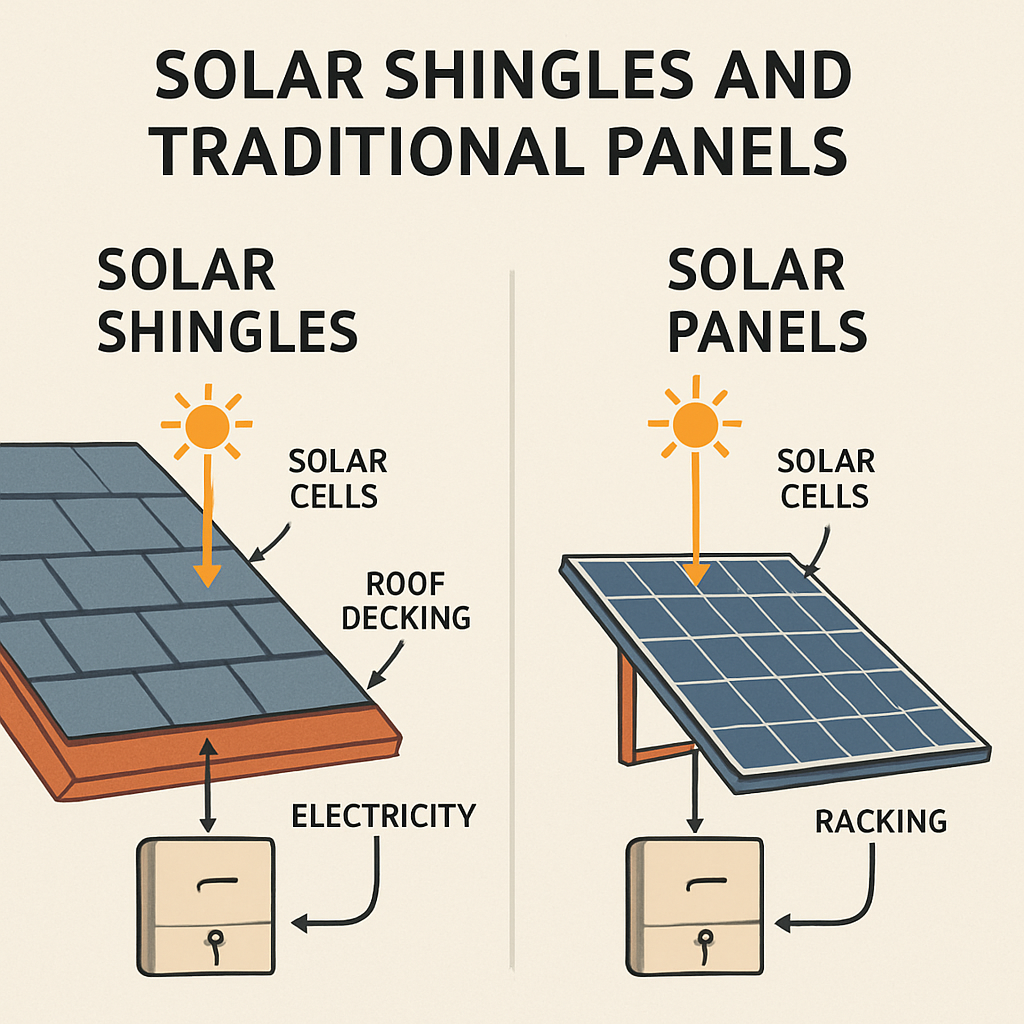
Solar shingles are an innovative alternative to traditional solar panels. They resemble regular roofing shingles but capture solar energy.
Traditional solar panels have long been the standard. These panels are installed on top of existing roofs and are highly efficient.
Each option has distinct advantages. Here’s a quick overview:
- Solar Shingles: Aesthetically pleasing, dual-purpose as roofing material, more resistant to damage.
- Traditional Solar Panels: High efficiency, broad manufacturer availability, easier to maintain and install.
Homeowners with specific aesthetic preferences may prefer solar shingles. These shingles integrate seamlessly into roof designs, offering a less obtrusive appearance.
On the other hand, those with larger energy needs often opt for traditional panels. Their established technology and energy conversion rates make them a reliable choice.
❓How Solar Shingles Work vs. How Traditional Solar Panels Work
Solar shingles and traditional solar panels both convert sunlight into electricity. However, their methods and appearances differ significantly.
Solar shingles are built to resemble standard roofing materials. They use photovoltaic cells to generate electricity while forming a protective roof layer.
Traditional solar panels are mounted onto existing roofs. They consist of numerous photovoltaic cells linked together, converting sunlight into usable energy.
Here’s a brief breakdown:
- Solar Shingles: Blend into roofs, act as roofing, less efficient in energy conversion.
- Traditional Solar Panels: Positioned above roofs, highly efficient, require mounting systems.
Solar shingles are often preferred in new constructions or roof replacements. They serve a dual purpose by replacing roof tiles while generating electricity.
Conversely, traditional panels add an overlay onto existing roofing structures. This makes them ideal for homeowners not looking to replace their roofs.
⛔️Solar Panel Efficiency: Shingles vs. Panels
Efficiency is crucial when choosing solar solutions. Traditional solar panels typically offer higher efficiency rates than solar shingles.
The efficiency of traditional solar panels ranges between 15% and 22%. This allows them to produce more electricity from less sunlight exposure.
In contrast, solar shingles generally achieve efficiency rates around 14% to 17%. This can limit electricity generation, especially in less sunny areas.
Despite the efficiency gap, solar shingles can be a better choice for homes with space constraints. Their integration into the roofing system saves space.
Key efficiency points to consider:
- Traditional Solar Panels: Higher efficiency, greater energy output, require more roof space.
- Solar Shingles: Lower efficiency, compact design, integrate seamlessly with roofs.
When deciding between the two, consider sunlight exposure and energy needs. This will help in choosing the most efficient option for your home.
🟣Aesthetics and Curb Appeal: Visual Differences
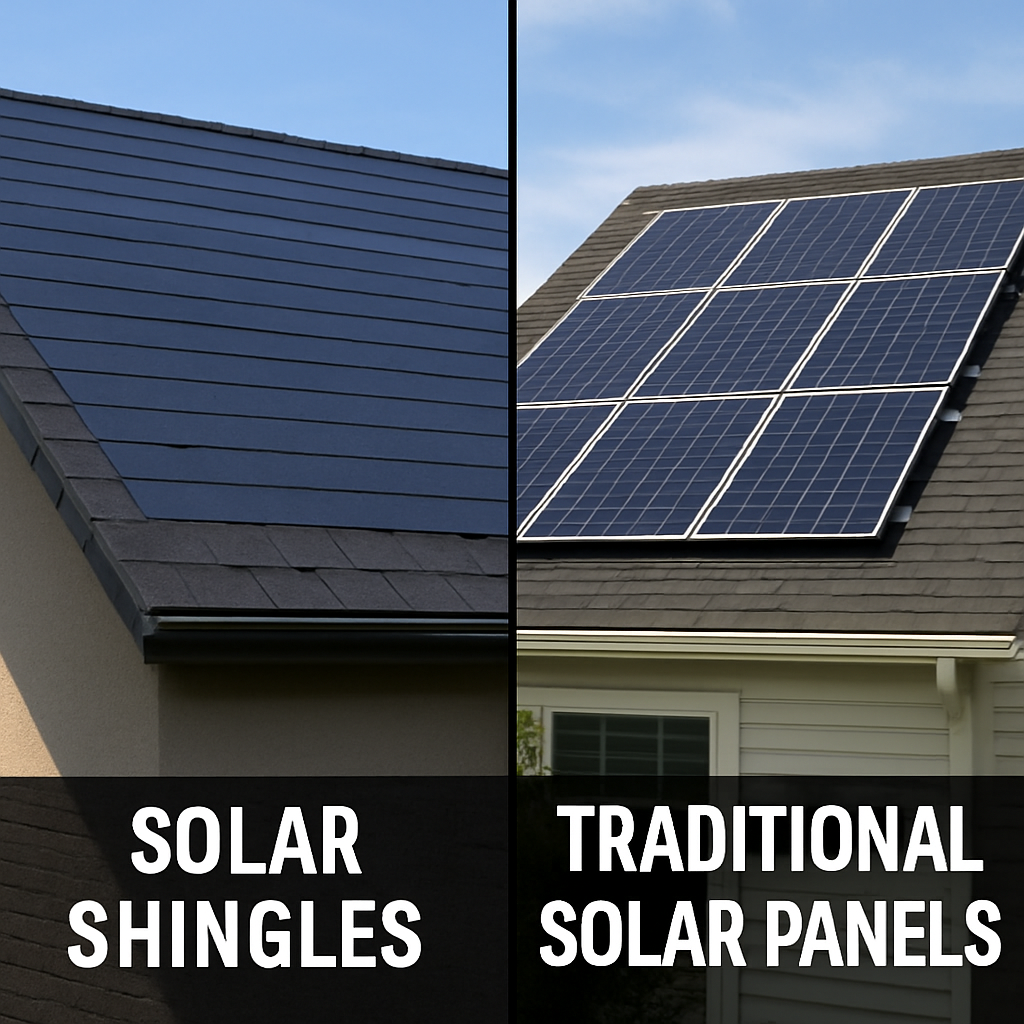
A home’s appearance is as important as its energy savings. Solar shingles shine in the aesthetics department compared to their traditional counterparts.
Solar shingles are designed to blend seamlessly with your existing roof. They come in various styles and closely mimic conventional roofing materials.
Traditional solar panels, while efficient, are often more visible and can clash with certain architectural styles. This can be a significant factor for homeowners who prioritize visual appeal.
Consider these aesthetic factors:
- Solar Shingles: Blend with existing roofing, enhance curb appeal, ideal for strict HOA guidelines.
- Traditional Solar Panels: More noticeable, may not match all roof styles, focus on energy performance.
Your neighborhood and personal tastes play a role in this decision. Ultimately, your choice will balance appearance with energy benefits.
💰Cost and Installation: What to Expect
Cost is a crucial factor when deciding between solar shingles and traditional panels. Understanding the financial aspect helps make an informed decision.
Solar shingles generally have a higher upfront cost. This is due to their dual role as both roofing material and energy producer.
However, their aesthetic appeal and potential to increase property value can offset the initial investment over time.
Traditional solar panels are often more budget-friendly. They offer a lower installation cost and are widely available.
Installation complexity is another consideration. Solar shingles typically require a roofing expert, which can increase labor costs.
List of cost considerations:
- Solar Shingles: Higher initial cost, potential property value boost, more complex installation.
- Traditional Solar Panels: Lower upfront cost, simpler installation, cost-effective for larger projects.
Both options may qualify for tax incentives and rebates, which can ease the financial burden. Homeowners should weigh these factors against long-term energy savings.
🔑Durability, Lifespan, and Maintenance
Durability is crucial when choosing a solar solution. Both shingles and panels are designed to withstand the elements.
Solar shingles offer robust protection. They’re embedded into the roof and more resistant to wind and weather damage.
Traditional solar panels are also durable. With proper care, they can last between 25 to 30 years.
The lifespan of solar shingles is similar. They often match the longevity of the roofing materials they’re integrated with.
Maintenance for both options varies. Traditional panels might require routine cleaning to maintain performance. Shingles typically need less upkeep due to their seamless integration.
List of key points on durability and maintenance:
- Solar Shingles: Resilient, needs less maintenance, lifespan of 20-30 years.
- Traditional Solar Panels: Durable, routine cleaning required, lifespan of 25-30 years.
Choose based on your environment and maintenance willingness.
➡️GAF Solar Shingles and GAF Master Elite Contractors
GAF solar shingles are a well-regarded choice in the solar market. They seamlessly blend with roof designs, maintaining aesthetics without compromising energy production.
GAF Master Elite contractors specialize in these installations. Certified and experienced, they ensure quality and reliability in every project. Hiring a certified contractor can make a significant difference in both installation efficiency and overall satisfaction.
These contractors offer several benefits:
- Expertise: Deep understanding of GAF products and roof integration.
- Reliability: They adhere to stringent standards for top-notch installations.
- Peace of Mind: Assurance of long-term performance and optimal efficiency.
When considering GAF products, their certified professionals provide valuable guidance.
Solar Shingles vs. Traditional Solar Panels: Pros and Cons
Choosing between solar shingles and traditional solar panels requires weighing their pros and cons. Each option offers distinct benefits and challenges, influencing the decision for homeowners.
Pros of Solar Shingles
- Aesthetic Appeal: Blends seamlessly with the roof design.
- Space Efficiency: Ideal for homes with limited roof space.
- Weather Resistance: Often more resistant to wind damage due to integration with the roof.
Cons of Solar Shingles
- Higher Cost: The initial investment can be more expensive.
- Lower Efficiency: Generally less efficient in energy conversion.
- Installation Complexity: Often requires specialized contractors, potentially leading to higher installation costs.
Pros of Traditional Solar Panels
- Cost Efficiency: Generally more affordable with a greater return on energy needs.
- High Efficiency: Superior energy conversion rates.
- Wide Availability: Numerous options are available in the market.
Cons of Traditional Solar Panels
- Visual Impact: More obtrusive, potentially affecting home aesthetics.
- Structural Support: May require additional roof reinforcements.
- Maintenance Needs: Regular cleaning and care are often necessary.
Understanding these factors helps you make an informed choice that fits your home’s needs.
🪝Which Option Makes More Sense for Your Home?
Deciding between solar shingles and traditional solar panels depends on several factors. Consider your aesthetic preferences, budget, and energy needs. Both options have merits, so choosing the right one involves evaluating personal circumstances.
For those prioritizing appearance, solar shingles offer a sleek, integrated look. They’re less noticeable and can enhance curb appeal. If you’re focused on efficiency and cost-effectiveness, traditional solar panels may be the better option.
Key Factors to Consider:
- Roof Space: Limited space favors shingles.
- Energy Needs: High energy needs lean towards panels.
- Budget Constraints: Panels often suit tighter budgets.
Carefully weighing these factors helps determine the ideal choice for your home and lifestyle.
🔑Key Considerations Before You Decide
Choosing between solar shingles and traditional panels involves important considerations. Homeowners must assess their roof’s condition and future needs. It’s crucial to think about energy goals, budget, and aesthetic preferences.
Consider these Factors:
- Local Climate: Affects solar efficiency.
- Roof Orientation: Influences sunlight exposure.
- Installation Costs: Can vary significantly.
Evaluate these elements carefully. Consulting with experts can also provide insights tailored to your specific situation. Making an informed choice will ensure that your solar investment meets your expectations and efficiently benefits your home.
✅Frequently Asked Questions
Do solar shingles generate enough power?
Solar shingles can meet standard energy needs. However, their efficiency often depends on roof size and sun exposure.
Are there tax incentives for solar shingles?
Yes, tax credits and rebates may apply. These incentives can offset some of the initial costs, making them more appealing.
How long do solar shingles last?
Solar shingles have a lifespan of about 20-30 years. This is comparable to traditional roofing materials.
Is professional installation necessary?
Professional installation ensures optimal function. Certified contractors, like GAF Master Elite, are recommended for quality assurance.
Can solar panels be added to a flat roof?
Yes, traditional solar panels can suit flat roofs. Panels can be angled appropriately to capture maximum sunlight.
❇️Conclusion: Making an Informed Choice
Choosing between solar shingles and traditional solar panels depends on various factors. Both options have their benefits and limitations.
Consider your budget, energy needs, and aesthetic preferences. Each factor plays a role in determining the most suitable choice for your home.
Involve an expert for a tailored assessment. A professional can guide you to a decision that maximizes efficiency and long-term savings.